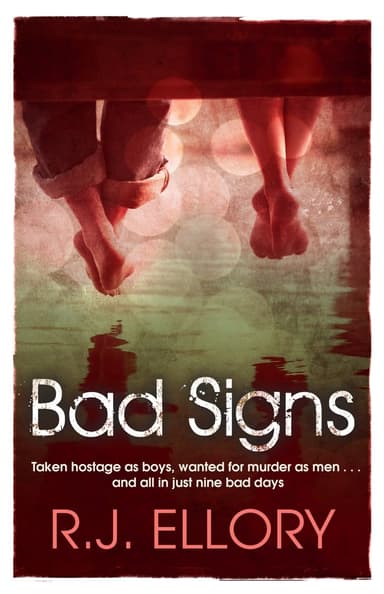
Bad Signs gripped Reading Circle 254 members from the very first pages, drawing us into a dark, tense world shaped by trauma, moral ambiguity, and unforgettable characters. After reading the novel, our members submitted questions for R.J. Ellory, eager to explore the characters, themes, and storytelling choices that made Bad Signs such a haunting read.
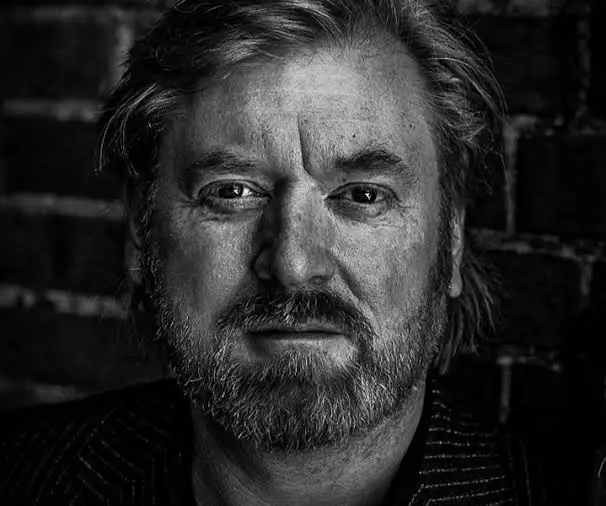
I have always rejected the idea of writing a sequel or a series character. For me, the process of creating an entirely new story with each book is one of the pleasures of writing. In the beginning, I was advised to write a series but it never appealed to me.
I think it is very restrictive. It is easier to get published if you propose a series, but I could see that it would become a trap. I have fellow authors who are committed to a series and they express their frustration about having to write about the same people in the same location and time period.
I know some writers who have presented an entirely different novel to their publisher, and their publisher has rejected it because it isn’t part of an existing series. Writing is a solitary business. You have to enjoy the company of the characters you create. It takes a lot of persistence to write five hundred pages, and if you are not enthusiastic about what you’re doing then it becomes a chore and a hardship.
I am fortunate to be able to spend my life doing something I love, and much of that love comes from the freedom to write what I want. So no, I never considered a standalone about Earl Sheridan and I think there is enough about him in Bad Signs to understand the kind of person he is.
You know, I receive a lot of e-mails about this, and have done so before with numerous books. For me, the characters are the most important aspect of a story. I always aim to make the characters as real as possible. I think tension is actually created by your emotional engagement with the characters.
It will be different characters for each reader, and for different reasons, but when someone asks me about what might have happened to certain people beyond the end of a story, I take it as a compliment! I like to think that Clay and Bailey went on to have a happy and successful life together. They were good people, and they were very much in love with one another.
Additionally, they survived some truly awful situations and the learned not only to trust one another, but came away with a bond of shared experience that was theirs and their alone. I think that would serve as a very strong foundation for a life together.
That’s quite a difficult question because I wrote “Bad Signs” fifteen years ago and I write a new book every year. I am invested in each new book to the same degree, so I have to sort of disengage with the plot and the characters of the previous book each time. Perhaps the most significant element of this book is the way in which each brother responds to Earl Sheridan. If their responses had been different, then it would be an entirely different story. It’s the fact that one yields to the negativity, cynicism and toxicity of Sheridan and the other one doesn’t that creates the tension and – ultimately – the exposure of the basic nature of each brother.
As far as real life is concerned, we see this continually in the way that people respond to stress and trauma. It really comes down to a decision – whether one sees hardship and difficulty as a challenge to overcome, or if one decides to be a “victim”. That then highlights the respective responsibility level of each person affected by a trauma. It has often been said that dangerous and violent criminals have difficult and abusive childhoods in common, but there are millions of people all over the world who have suffered difficult and abusive childhoods, and yet they do not feel the “world” is to blame, nor do they resort to violence, abusing others or committing crimes.
There are people I know personally who have endured terrible traumas in their lives, and yet they have never lost their humanity. Some of them have gone on to do truly extraordinary things, a lot of those things based around doing whatever they can to help others in difficulty.
So yes, I believe it all comes down to the decisions one makes in life – are you going to allow your experiences to shape and control you, or are you going to use those experiences to become a stronger, more able, more human individual.
Family has always been of great interest to me. My father left before I was born, and I have no idea who he was. I stayed with my mother and my maternal grandmother until I was seven years old, and then my mother died. My maternal grandfather had drowned before I was born, so I never knew him. Also, of course, there were no paternal grandparents. My mother was an only child, and thus there were no aunts, no uncles, no cousins etc. I had an older brother (by one year), but after my mother’s death we were separated and sent to different boarding schools and finally to an orphanage.
We had very little to do with one another, in fact. I returned from school when I was sixteen, and a few months later my grandmother died and so that was the end of any family. My brother and I didn’t see one another for thirteen years, and then he reconnected with me after he saw my first book in a supermarket. He wrote to my publisher with his contact details, and we re-established communication. By this time we were both in our thirties. I had a son, he had two, and – as soon as we met again – it was as if I had only seen him a week before. It really highlighted the connection between close relatives, and that there is a bond that cannot be broken by absence or lack of communication.
I think, to some extent, everything that a writer writes has to have some element of autobiographical experience within it. It’s perhaps inevitable. If not actual experience, then at least a reflection of the writer’s own emotional, psychological and spiritual perspectives about life. I think when I began “Bad Signs” I wanted to explore that – the sense that even though these two people were brothers, they were very different and could be influenced by the same events in very different ways.
Life. People. Conversations. Travel. Meeting strangers and listening to their experiences. I am interested in the psychology of the human condition. I am interested in history, politics, culture, humanity as a whole. Paul Auster once said that becoming a writer was not a ‘career decision’ like becoming a doctor or a policeman. You didn’t choose it so much as get chosen, and once you accepted the fact that you were not fit for anything else, you had to be prepared to walk a long, solitary road for the rest of your days, and I concur with his attitude. I think I knew from a relatively early age that this wasn’t a job, but a vocation. It was something I had to do.
There was no choice in it. I think for the sixteen years that I was writing without being published I just believed that I hadn’t found the right editor or the right publishing company, and it was simply a matter of persisting. I remember a quote from Disraeli where he said ‘Success is entirely dependent upon constancy of purpose’, and I believed that this was the right attitude to have. That it was just simply a matter of working harder, of putting more into it, of persisting, and it would all come out right in the end.
Even now, I still have utterly unattainable standards, and I always want it to be bigger and better and to have more books published and have more people reading them! I think that this attitude is a reflection of my nature and personality, and I don’t think that drive and intention will ever change. As far as ideas, and where they come from, I think all of us see life in a very unique way. As a dancer, a choreographer, a poet, a painter, a musician, a film-maker…whatever you happen to be, you look at life through eyes that are your own, and you see things in a way that will inspire you.
A choreographer is perhaps inspired by the way someone walks, how they move, whereas a writer can overhear a conversation between two people on the subway and it prompts an idea which grows into a story. That’s the way creative people work, I believe. I love to write. I love to cook. I love to play guitar. I am passionate about the things I do.
I am always open to conversation, to meeting new people, to experiencing new situations, and I think it is that openness that puts me in circumstances where there are always ideas floating around and ready for me to pick up and work with. I think it is just my nature.
The title “Bad Signs” comes from the song by William Bell and Booker T. Jones. For me, it always conveyed the idea of someone carrying with them the idea that – as a result of fate or destiny – their future was preordained, and that they were consigned to suffer bad luck no matter what they did. As for the building of a story, I am not a planner.
I don’t approach this is any kind of academic or structured away. I have no defined plot, no outline, no synopsis. I just simply have a rough idea of the kind of story I would like to write. I have a definite idea of the time period and location as these are vital to the tone of the novel. And the last thing, and the thing I have the clearest idea of, is how I want the reader to feel. I change my mind as I work. I make new decisions about characters, about the ending, about all sorts of things. I just keep trying to write the best novel I can.
I think the worst kind of novel you could write is the one that you think other people will enjoy, and the best novel you could write is the one that you believe you yourself would enjoy. With me, the most important thing about any novel is the emotion it evokes. The reason for writing about the subjects I do is simply that such subjects give me the greatest opportunity to write about real people and how they deal with real situations. There is nothing in life more interesting than people, and one of the most interesting aspects of people is their ability to overcome difficulty and survive. I think I write ‘human dramas’, and in those dramas I feel I have sufficient canvas to paint the whole spectrum of human emotions, and this is what captures my attention.
I once heard that non-fiction possesses, as its primary purpose, the conveying of information, whereas fiction possessed the primary purpose of evoking an emotion in the reader. I love writers that make me feel something – an emotion, whatever it might be – but I want to feel something as I read the book. There are millions of great books out there, all of them written very well, but they are mechanical in their plotting and style. Three weeks after reading them you might not recall anything about them. That is not meant as a criticism, because that degree of clever plotting takes a great intellect, and is probably something I just could not do well. However, the books that really get me are the ones I remember months later. I might not recall the names of the characters or the intricacies of the plot, but I remember how it made me feel. For me, that’s all important. The emotional connection. Those are the kind of books I am trying to write, and those are the books I read.
As for my work schedule, I am disciplined. I start early in the day. I try and produce three or four thousand words a day, and work on the basis of getting a first draft done in about twelve weeks. Sometimes it takes longer, sometimes shorter. I buy a new notebook, a good quality one, because I know I’m going to be carrying it around for two or three months, and in the notebook I will write down ideas I have as I go. Little bits of dialogue, things like that. Sometimes I have a title, sometimes not. I used to feel very strongly about having a good title before I started, but now – because at least half the books I’ve published have ended up with a different title - I am not so obsessive about it!
I think this has everything to do with the characters. As I said, I think tension doesn’t just come from writing in such a way that the reader wants (or needs) to know what happens next. That’s a very superficial answer because it doesn’t really explain why the reader has a desire to know what happens next.
I think the truth is that we can become emotionally or psychologically engaged with a particular character (or characters), and so we really want to know what happens next to that character. We want the bad guy to get what’s coming to them, and we want the people we care for to survive and escape this terrible situation. If a character is “real”, then we invest some of ourselves in that character. That’s certainly the way I feel when I read a book that engages me. I want to read books that I think about even when I am not reading them, and I want to read about characters that I think about even after the book is finished. I am trying to write that kind of book, too. With every new story, I want to feel that I am telling you about a series of events that really could have happened, and to make the characters respond and react in a way that doesn’t force you to suspend your disbelief.
I am sometimes disappointed when I read a book and something happens and it make me think, “There’s no way that’s possible!” That can throw you out of the story, and that’s not a good thing.
I think it’s because I have a basic and fundamental belief in the goodness of humanity. I know there are dangerous and crazy people in the world, but I believe that they make up a very, very small percentage of the population. I believe that the vast, vast majority of people are good, kind, decent, honest, hardworking and they really do care for others. They want to be happy, and they want others to be happy also. You only have to see a child upset or an elderly person perhaps struggling with carrying their shopping and observe how many people go to their aid without reservation.
We are defined by our humanity, and that is a driving force for most people. I also know that human beings have an almost infinite capacity to survive and carry on. Through hardship, travail, loss, personal catastrophe, financial ruin, through so many things that we believe someone could not survive, they just keep going.
I have a very spiritual perspective about human beings. I believe we are spiritual in nature, and that the body is merely a vehicle that we use to communicate with a navigate around the physical universe. I believe that the intelligence, emotion, creativity and love that a human being demonstrates comes from their spirituality. When the body dies, the spirit does not. This is the identity of the person. This is the person themselves. The strength and fortitude of the individual come from their spirituality, and that is demonstrated by the way they behave in life. So, for me, it is always important to have a moment of redemption, salvation, a “light at the end of the tunnel” for the characters in a story because I believe that this is how it so often is in life. We keep going, we find the courage necessary, we make the best of things, no matter how tough they might get, and we survive.
It is interesting to be asked a question like this because I don’t think about this in an academic or analytical way. Very simply, I sit down with a basic idea and the desire to tell a good story. I then start writing. I become engaged with the narrative and the characters, and I think about the story and where it will go while I am writing it. It is, in essence, an organic process. I do not work things out like an architect beforehand. I know a lot of writers who do that, and that is just the way they work. There is no “right” way to do this. There is no formula for a good novel. I know there are books that are intended to teach you how to write a good story, but they are generally written by teachers not writers. I have never taken a lesson in writing. I don’t have a formal education. I just have a love of literature and a desire to write in the best way I can. So, my apologies, but I don’t have a clear answer for you. I do what I do the way that I do it, and I always try to do it better.
And what do I hope readers will carry away with them when they have finished the book? I guess a sense of hope – that no matter how difficult things might be, there is always a way to make them better. That good so very often overcomes evil. That the majority of people are humane and forgiving. That the evil in Man is not natural, and that – more often than not – an individual who commits evil acts will bring about their own destruction.
This really came from my viewpoint about the nature of human beings and that it is attributable to their innate and inherent spiritual personality rather than nurture, education, environment etc. In the past I have researched the lives of some truly dangerous people. For earlier books, I have studied serial killers, sociopaths and other destructive and anti-social individuals.
Time after time, we are told that such individuals had abusive and traumatic childhoods, and that these experiences were the factors that led them to behave the way they did. While I don’t disagree that childhood trauma and abuse can influence an individual’s personality and thus their actions in later life, I am also very aware o the fact that such individuals are in the minority. There are millions of people all over the world who have suffered great trauma and abuse in their formative years, and yet they do not go on to become violent, sociopathic and evil.
That then raises the question – is there something innate within such an individual that is triggered by childhood experiences? Is there some basic tendency toward evil in a percentage of the population that requires some sort of catalyst to become active? I believe that the vast, vast majority of people are fundamentally good, kind, decent, honest, tolerant and hardworking. They want to be happy and they want others to be happy. Then there is a very small percentage of individuals who are fundamentally in opposition to that. We could call them “antisocial personalities”, “toxic personalities”, “narcissists” – the label is not important. What is important is that there appears to be a “seed” within such people, and if given the wrong environment – abuse, trauma, domestic violence, the absence of love, the absence of a nurturing family environment – that “seed” is then encouraged to grow and results in a destructive, intolerant, unempathetic, violent personality.
And so, in relation to “Bad Signs”, I wanted to explore how two people from the same background could then respond to an external catalyst in a very different way. Clay – as far as his fundamental human nature is concerned – is a good person; he cares for others and he wants to survive; he considers others’ well-being along with his own. Elliott, however, is triggered in such a way as to become an individual of hatred and violence; he only thinks of himself; others are there merely to further his own ends; he considers solely his own survival and is unconcerned with the effects he creates on others. A good example that highlights the difference between nature and nurture is twins: two children born at the same time – the same parents, the same education, the same diet, the same friends, the same society, the same experiences – and yet one becomes a highly-motivated and contributing member of society, raises a family, is a good parent and partner, whereas the other becomes a drug addict, a criminal and a murderer. That area of human psychology has always fascinated me, and that was the motivation for writing about the basic differences between Clay and Elliott.
In truth, you have answered the question with the question. As I have mentioned before, the primary motivation in writing a story is to evoke an emotional response on the part of the reader. I am asked why I write crime novels.
I write them for two reasons. The first is that this genre can effortlessly encompass all other genres. You can have a crime story that is historical, futuristic, military, a romance, a conspiracy; you can have a crime novel set in a maritime environment, in the Wild West, in the jungle — anywhere you wish. It is almost limitless. The second reason, and by far the most important for me, is to take an ordinary individual and place them in an extraordinary situation. It’s rather like the films of Alfred Hitchcock which I so enjoyed as a child (and still enjoy to this day). Placing an ordinary individual in an extreme situation gives me the opportunity to write about the entire spectrum of human emotion and reaction.
I hope to create a character with whom the reader can relate, and then give that character a very difficult situation to confront and resolve. Of course, not all the books I write are violent, but in each and every one there is this theme of a human being having to face something that defies their concept of how they thought their life would be. I am creating a scenario where the balance of their existence is dramatically disturbed, and then we can explore how they work toward regaining that balance.
Loading comments...